Why Dubai Real Estate Doesn’t Blink at Regional Noise
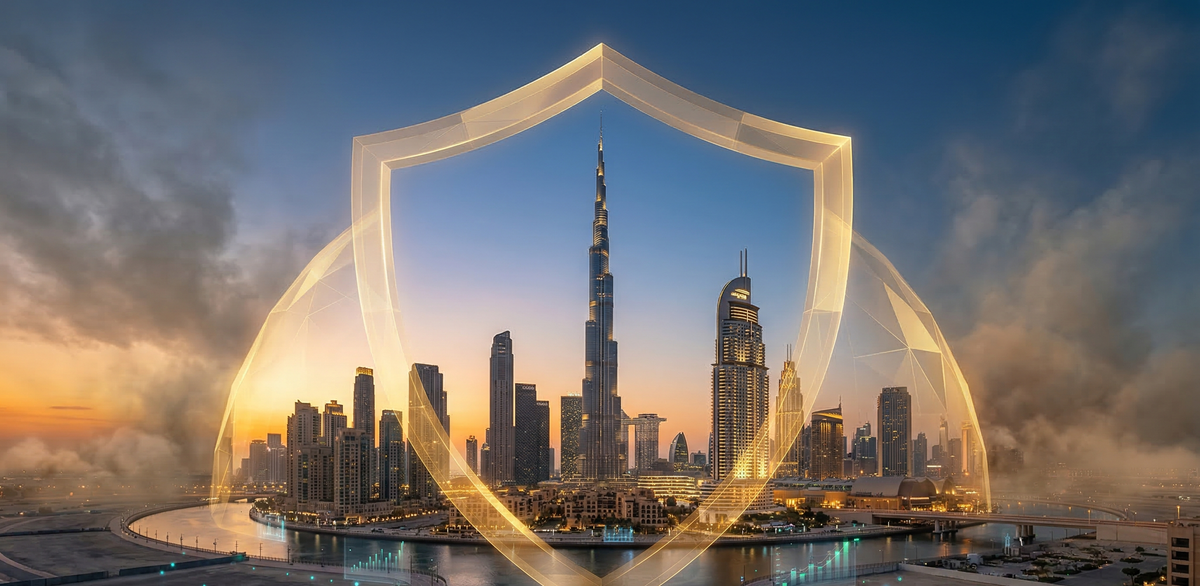
If you’ve been watching the headlines lately, you’d be forgiven for thinking the Dubai property market is on edge. Between the geopolitical back-and-forth in the wider region and the "wait-and-see" sentiment that usually follows, the "doom and gloom" predictions are always just one click away.
But if you look at the actual data coming out of the Dubai Land Department, a very different story emerges. While the headlines are loud, the numbers are surprisingly steady.
The "March Freeze" vs. The January Surge
To understand where we are, we have to look at where we started the year. January 2026 was the most explosive start in Dubai’s history, with transaction values hitting roughly AED 72.4 billion—a massive 63% jump year-on-year.
Then came the regional escalations in late February and early March. Yes, we saw a temporary "freeze." In the first half of March 2026, transaction values dipped by about 50% month-on-month. But here is the thing: this wasn't a collapse; it was a pause. Investors didn't run for the exits; they simply pulled their hands back from the table to see how the wind was blowing. By mid-March, activity in the off-plan and villa segments was already beginning to "thaw."
Why the Market is "Shock-Proof"
Dubai’s resilience isn't some marketing magic trick; it’s baked into the structure of the city. Here’s why the floor doesn't drop:
- The Cash-Heavy Buffer: In many global cities, a geopolitical hiccup sends mortgage rates spiraling and the market crashing. In Dubai, a huge chunk of the luxury and ultra-luxury segment is settled in cash. This makes the market significantly less sensitive to interest rate volatility or credit tightening.
- The Safe-Haven Pivot: Historically, when things get tense in the wider Middle East or Europe, capital looks for a place to hide. Dubai has spent 20 years positioning itself as the "Switzerland of the Sand." With zero property tax and the Golden Visa program, it’s where wealth goes when it needs a stable roof.
- Regulatory Maturity: We aren't in the "Wild West" era of 2008 anymore. The mandatory escrow accounts and transparent DLD data mean that even if sales slow down, the projects themselves are protected.
The "Healthy Realignment" Theory
Some analysts are actually welcoming this tension-induced slowdown. Before the current regional noise, the market was heading toward a potential overheat. With nearly 120,000 units scheduled for handover in 2026, a slight cooling of demand might actually prevent a bubble, leading to what some call a "healthy correction" rather than a crash.
The luxury segment—specifically areas like Palm Jumeirah and Dubai Hills—is still seeing prices hold firm. Why? Because the supply is fixed, but the global appetite for "safe" lifestyle assets is only growing.
The Bottom Line
Dubai’s real estate market has survived a global pandemic, oil price crashes, and multiple regional cycles. Each time, it comes out the other side with more institutional depth. The current tensions are a test, sure—but it’s a test Dubai has passed before.