The Rise of the Branded City: Why Mercedes-Benz is Redefining Dubai’s Urban Blueprint
If you’ve lived in Dubai long enough, you’ve seen the "branded residence" trend go through several lives. It started with a fashion house logo on a lobby wall, then moved into fully furnished apartments that looked like a perfume bottle. But what’s happening now in Meydan is a different beast entirely.
We are moving past the era of the "branded building" and into the era of the Branded City.
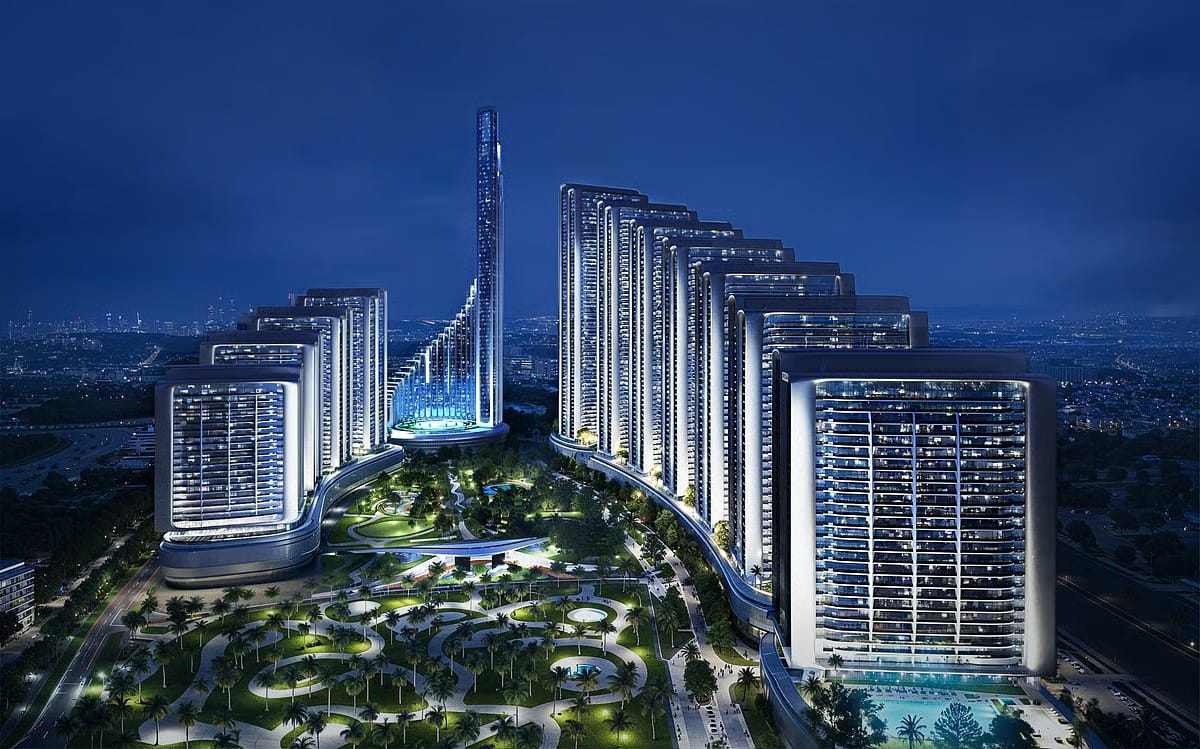
The announcement of Mercedes-Benz Places in Nad Al Sheba isn't just another press release about a shiny tower. It’s a Dh30 billion statement about where the region’s real estate market is headed. We aren't just buying square footage anymore; we’re buying into a 10-million-square-foot ecosystem designed by an automotive giant.
What Does a "Branded City" Actually Mean?
In the past, a brand partnership was largely about aesthetics—choosing the right marble and a specific color palette. This project flips that script. It’s a "city within a city" concept that attempts to translate a car’s DNA into urban planning.
Instead of one standalone tower, the master plan features 12 residential skyscrapers radiating around a central anchor called "Vision Iconic." Each tower is named after a specific Mercedes-Benz concept vehicle (like the Vision AVTR or the Vision One-Eleven), essentially turning a neighborhood into a physical timeline of the brand’s history.
But the real shift is in the infrastructure. A branded city doesn’t just look like the brand; it functions like it.
- Mobility as a Service: The project includes dedicated mobility hubs with automated valets and autonomous shuttle services. It treats the "last mile" of your commute with the same precision as a German engine.
- The Facade as a Power Plant: The towers are using integrated solar technology (BIPV) in their "skin," meaning the buildings themselves generate power to fuel the community’s EV charging network.
The Regional Ripple Effect
Why does this matter for the UAE and the wider Middle East?
- A New Global Benchmark: Dubai is effectively the R&D lab for global real estate. If this "branded city" model works, expect to see "Bentley Boroughs" or "Apple Quarters" popping up in other major capitals. It proves that a brand's loyalty can be leveraged to build entire neighborhoods, not just products.
- The "Sticky" Investor: By creating a self-sustained ecosystem—complete with 12 sporting clubs, wellness zones, and retail boulevards—the project aims to keep residents (and their capital) within the brand's orbit. This isn't just a place to sleep; it’s a high-yield asset designed for long-term retention.
- The Luxury Floor is Rising: When you have a 341-meter tower that integrates AI-driven gyms and 4.2-meter-high ceilings as the standard, it forces every other developer in the region to level up.
The impact of Mercedes-Benz Places goes beyond luxury. It’s an experiment in how we integrate technology and brand identity into the very fabric of where we live. In a region that is rapidly diversifying its economy and attracting a new wave of global HNWIs, projects like this aren't just "nice to have"—they are the new minimum requirement for staying relevant on the global stage.